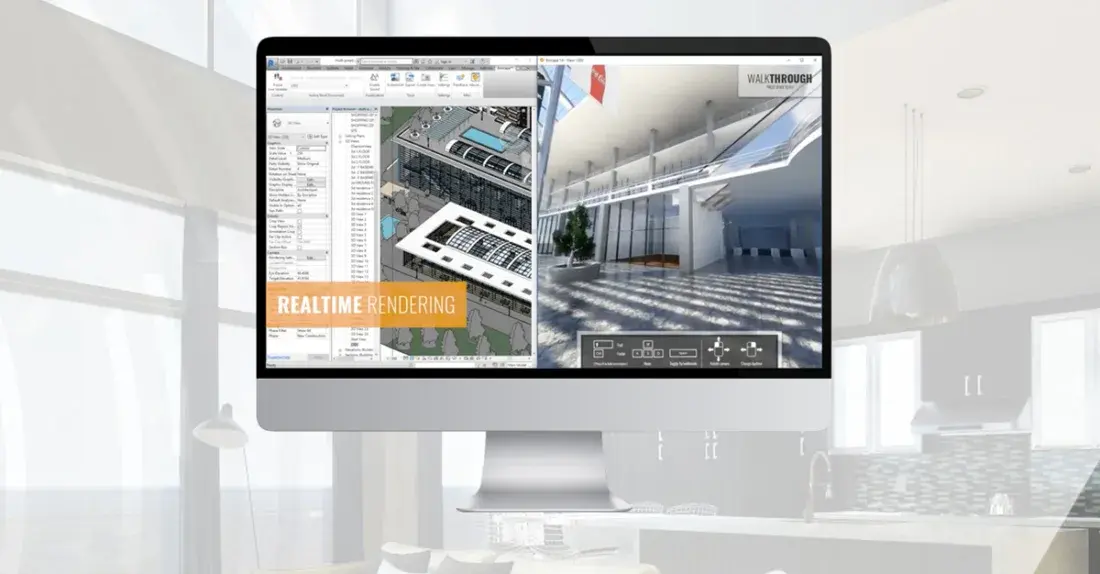
The geometry stage is a key part of real-time rendering. Here, polygon models are transformed and processed through a series of consecutive steps, including model and view transformation, lighting, projection, clipping and screen mapping. The final stage is rasterization, where colors are applied and graphic elements are converted into pixels, or picture elements. Real-time rendering gives users an engaging interactive experience. Because images are displayed in under 1/30 of a second, user input can be processed and answered almost instantly, creating a truly exciting experience. Immersive technology offers users a remarkable, personalized journey in which they can take actions and interact with the generated 3D environment. Unlike conventional animation, users have full control over what happens on screen: they can change certain settings, move around, open and close doors, switch lights or the TV on and off, and remove sections of wall or even the entire roof to view the building from different angles.